
If you’ve been staring at your credit card statements lately, you probably feel like you’re running on a treadmill that’s moving just a little too fast. The interest is piling up, the minimum payments feel like they’re barely touching the principal, and you’re wondering if there is a way to actually catch up. You aren’t alone. Most people hit a point where they need to stop the bleeding from high-interest rates.
When you start looking for ways to consolidate what you owe, you usually run into two main contenders: balance transfer credit cards and personal loans. At first glance, they might look like they do the same thing—moving debt from one place to another—but the mechanics, costs, and long-term impacts are wildly different. Choosing the wrong one can accidentally leave you in a deeper hole than when you started.
Understanding the Balance Transfer Strategy
A balance transfer card is a specific type of credit card designed to move high-interest debt from your current cards onto a new account with a much lower interest rate. Most people use these because they offer a 0% introductory APR period. During this window, every dollar you pay goes toward your actual balance rather than being eaten up by interest charges.
These introductory periods typically last anywhere from 12 to 21 months. If you can pay off your entire balance before that period ends, you’ve essentially won the game. However, if a balance remains when the promo expires, the interest rate will jump to a standard, much higher APR, often ranging between 18% and 29%.
The Hidden Costs of Moving Credit Card Debt
Don’t assume that moving the debt is free. Almost every card issuer charges a balance transfer fee. This is usually a percentage of the amount you are moving, typically ranging from 3% to 5%. While that might sound small, it adds up quickly. If you transfer $5,000, a 5% fee means you’ve instantly added $250 to your debt.
You also need to be careful about your credit limit. If you get approved for a card with a $2,000 limit, you can’t move $5,000 onto it. This can lead to a frustrating situation where you’ve only moved a fraction of your debt, leaving the high-interest portion still accumulating interest on your old cards.
Evaluating Personal Loans for Debt Consolidation
Personal loans operate on a different logic. Instead of a revolving line of credit, you receive a lump sum of cash upfront, which you use to pay off your various creditors. You then pay back the loan in fixed monthly installments over a set term, such as 2, 3, or 5 years.
Unlike the 0% window of a credit card, a personal loan has a fixed interest rate from day one. While this rate is rarely 0%, it is almost always significantly lower than the 20%+ rates found on standard credit cards. For someone with a good credit score, you might find rates between 6% and 12%, though much higher rates are available for those with lower scores.
One major advantage here is the psychological component. Because the loan has a fixed end date, you know exactly when you will be debt-free. There is no “ticking clock” of an expiring promo period to stress you out.
Comparing the Financial Breakdown
To help you decide, let’s look at how these two options stack up side-by-side. When you compare the total cost, the math depends heavily on your repayment speed.
| Feature | Balance Transfer Card | Personal Loan |
|---|---|---|
| Interest Rate (APR) | 0% during intro period; then 18-29% | Fixed rate (typically 6% – 36%) |
| Repayment Structure | Revolving (flexible, but no set end date) | Installment (fixed monthly payments) |
| Upfront Fees | 3% – 5% transfer fee | 0% – 6% origination fee |
| Best For… | Aggressive, short-term repayment | Long-term, structured repayment |
Which Option Fits Your Current Budget?
Deciding between these two often comes down to how much debt you have and how much cash you can swing each month. If you have a manageable amount of debt—say, under $5,000—and you have a steady income that allows for large monthly payments, a balance transfer card is likely your best bet. The 0% interest allows you to crush the principal balance rapidly.
On the other hand, if you are carrying $15,000 or more, or if your monthly budget is tight, a personal loan provides much-needed stability. You won’t have to worry about a sudden interest rate spike, and the fixed monthly payment makes it much easier to plan your household budget. It provides a predictable path forward that a credit card simply cannot offer.
A Note on Credit Scores and Regulations
Both options require a decent credit score to be effective. To qualify for the best 0% APR cards or the lowest-interest personal loans, you generally need a score of 690 or higher. If your score is lower, you might still get approved, but the fees and interest rates could negate the benefits of consolidating in the first place.
It is also worth remembering that the Truth in Lending Act (TILA) requires lenders to be transparent about their APRs and terms. Always look for the Schumer Box on credit card offers or the Truth in Lending disclosure on loan documents. This part of the paperwork will explicitly state the total cost of borrowing, including all fees and interest calculations.
Common Pitfalls to Avoid
Moving debt is a tool, not a cure. The biggest mistake people make is using a balance transfer card to clear their debt, only to immediately start charging new purchases to the old cards. This creates a cycle of “double debt” that is incredibly difficult to escape.
Other risks include:
- Ignoring the transfer fee: Always calculate if the fee is worth the interest savings.
- lMissing a payment: On many 0% cards, a single late payment can trigger the cancellation of your promotional rate.
- Taking too long to pay: If you don’t finish the balance before the intro period ends, the interest spike can be devastating.
- Overextending your credit limit: Trying to move more than your new limit allows.
If you find yourself struggling to choose, take a moment to look at your monthly “extra” cash. If you have plenty of extra cash, go for the card. If your budget is tight, go for the loan.
Taking the Next Step
Regardless of which path you choose, the goal remains the same: reducing the amount of money you pay to lenders so you can keep more of it for yourself. Before you apply, gather your recent statements, calculate your total debt, and determine exactly how much you can afford to pay toward this debt each month. Once you have that number, you can search for lenders that align with your specific financial situation.
Don’t let the fear of debt paralyze you. By actively choosing a consolidation method, you are already taking control of your financial future. Start by checking your credit score, then start comparing your options.
Our Top Picks
Products we recommend:
1. Distressed Debt und Non-Performing Loans
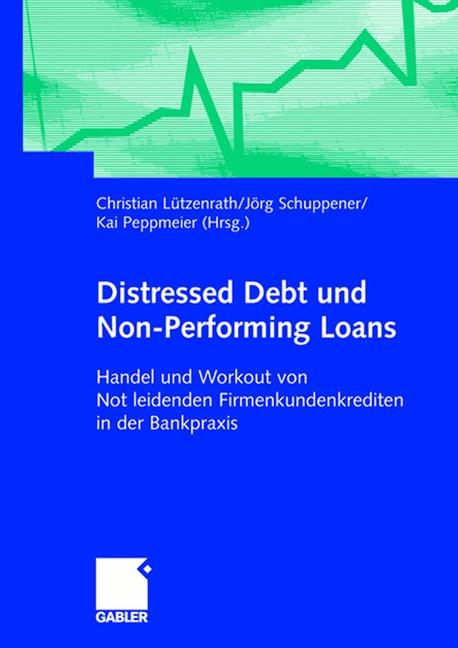
2. Distressed Debt und Non-Performing Loans
3. Personal Debt in Europe